
175 | Christian Birth Story After Infertility: Guest Interview With Chelsea
There’s a kind of faith that only grows in the waiting. On this episode of the podcast, Chelsea shares her story.
Chelsea knows that kind of faith well. She and her husband, Evan, spent seven years trusting God with their fertility. Seven years of hoping, grieving, praying, and choosing to believe even when the answer kept being not yet. So when she finally held a positive pregnancy test in her hands, the emotion that came wasn’t just joy. It was the quiet, almost-disbelieving gratitude of someone who has waited a very long time.
By the time her son Crew arrived, Chelsea had done everything a prepared, research-minded mama could do. She’d chosen a home birth. She’d found a midwife. She’d taken labor classes, studied fetal positioning through Spinning Babies, and prayed over every detail. She was ready… or so she thought.
What she couldn’t prepare for was the birth God had instead.
A Pregnancy She Loved
Chelsea had always prayed she’d be one of those women who genuinely loved being pregnant. She was! She stayed active, worked alongside Evan on their pig farm, walked and moved and breathed through a healthy, full pregnancy. She remembers the first time she felt Crew kick. She and Evan were sitting in church during a sermon. They were both so moved they wrote it in their Bibles that morning: felt baby kick for the first time, with the date.
The pregnancy was mostly peaceful and smooth. There was one tumble off the kitchen counter over the holidays that sent them to the hospital just to be sure (baby was fine) and one ultrasound near the end that showed Crew measuring over nine pounds. But overall, Chelsea felt well and full of joy. The waiting had been long. The pregnancy was sweet.
The Birth
Labor began at 6:15 in the morning with contractions that were already three to five minutes apart — unusually close for a first-time mama. Chelsea called her midwife, who sent her assistant right away and cautioned her she might not make it in time. Things felt like they were about to move fast.
But they didn’t.
As the morning stretched on, contractions slowed and spaced out. Chelsea walked the driveway, visited the chiropractor to get adjusted, labored through the afternoon. By early evening she was at a six or seven, but there was something unresolved in the rhythm of it all that nobody stopped to name.
Then, around 7 p.m., an intense contraction made her vomit, her water broke, and she got into the birth pool. Her midwife asked if she felt the urge to push.
Chelsea said no.
Her midwife told her to push anyway.
For the next four-plus hours, Chelsea pushed. In the pool, on a stool, in bed, on all fours, on the toilet. She couldn’t keep food or water down. She was exhausted. Around 11:30 p.m., Evan saw the baby’s heart rate spike sharply on the monitor and made the call: they were going to the hospital.
At the hospital, doctors discovered Chelsea was severely swollen internally — her body had not been ready to push. They gave her Benadryl to reduce the swelling, offered an epidural, and encouraged her to rest. She slept for a few hours. When she woke up, she pushed Crew out in thirty minutes.
Nine pounds, one ounce. Healthy. Perfect. Here.
What the Lord Was Doing
Chelsea is gracious in how she tells this story. She doesn’t lead with anger. But she is honest. And her honesty is a gift to every mama listening.
Looking back, there were signs early in labor that baby’s position likely wasn’t ideal. Contractions that start unusually close together in early labor, then space out instead of intensify, can indicate that baby is asynclitic or posterior — meaning he isn’t lined up in the best position to descend. Positional work can help. However, this wasn’t addressed.
The decision to direct Chelsea to push before she felt the urge was the turning point. When a mama’s body isn’t ready, pushing doesn’t move a baby down. Pushing exhausts the mama, causes swelling, and stalls progress. Chelsea clearly communicated that she didn’t feel the urge. She was directed to push anyway, with no clinical explanation offered.
Cervical checks that could have assessed what was actually happening were not done during those hours of pushing. When Chelsea arrived at the hospital and was checked, the swelling they found explained everything.
Postpartum, the gaps continued. Chelsea was entitled to twelve weeks of follow-up care. She received two visits. Her midwife relocated her clinic mid-postpartum without communicating the change. This midwife is no longer in practice.
None of this is meant to frighten anyone away from home birth or midwifery care — both can be profoundly beautiful and safe. But it is a reminder that providers are human, that not every midwife is the right midwife, and that mamas deserve to ask hard questions and expect honest answers.
On Releasing Control
The most important thing Chelsea shared wasn’t clinical. It was spiritual.
She admitted that she had, somewhere along the way, gripped her birth plan too tightly. She’d watched the videos — the peaceful living room births, the mamas surrounded by their older children, the husbands holding their wives in the golden light — and she’d said: That’s what I want. That’s what it should look like. And there’s nothing wrong with wanting something beautiful for birth.
But when wanting becomes demanding, and planning becomes controlling, and I hope this goes a certain way becomes it has to go this way or something is wrong — that’s when we’ve moved from hope into idolatry. We’ve put our trust in a plan instead of God.
Chelsea said it plainly:
“Be very careful not to let even something as precious as birth become an idol.”
She also shared that partway through her pregnancy, she learned a highly recommended midwife had an unexpected opening. However, she talked herself out of switching because she didn’t want to inconvenience anyone or seem difficult. Looking back, she wishes she had followed that nudge.
Not because switching would have guaranteed a different outcome. But because it’s okay to change your mind. It’s okay to ask hard questions. It’s okay to say, I don’t think this is the right fit anymore. People-pleasing has no place in birth decisions.
The Lord was not absent from Chelsea’s birth. He was in Evan’s discernment when he called the ambulance. He was in the midwife’s assistant, who quietly came to Chelsea during those hard hours and asked: What is the Holy Spirit telling you to do? What is your body telling you? He was in the hospital team that took care of her well. He was in Crew’s first cry.
God doesn’t require perfect circumstances to show up. He just requires that we keep our hands open.
What This Means For You
Whether you’re planning a home birth, a birth center birth, or a hospital birth, here are a few things Chelsea’s story invites you to consider:
Ask your provider about fetal positioning. How do they recognize and respond when a baby isn’t in the optimal position? What do they do when labor patterns are unusual? These are fair questions to ask before labor begins.
Consider a doula — especially one trained in positional work. A doula’s entire job is your continuous physical and emotional support. They can recognize when labor needs a position change, advocate alongside you when you’re too exhausted to think clearly, and be the steady presence in the room when everything else feels uncertain.
Know that you can say no — or ask why. If a provider recommends something during labor, you have every right to ask for a reason. Informed consent is not just a hospital concept. It applies everywhere you give birth.
Hold the plan loosely. A birth plan is a beautiful gift to yourself. It’s a way of communicating your values, your hopes, and your preferences to the people caring for you. But a birth expectation treated as a guarantee is a setup for suffering. Write the plan in pencil. Trust the Lord in pen.
Postpartum matters too. Chelsea ended up exclusively breastfeeding Crew because he stopped taking a bottle around one week old and never looked back. It’s been a beautiful bond and also a logistical reality nobody fully prepares you for. Think about postpartum support before your baby arrives: a postpartum doula, a lactation consultant, a circle of women who will show up. You will need people, and that is not weakness. That is wisdom.
The Ending That Was Always His
Crew is almost one year old. He is healthy and loved and thriving on a pig farm in Oklahoma, and his mama is doing well.
Chelsea’s birth did not look like the videos. It looked like a long day of labor, four hours of pushing too soon, an ambulance ride at midnight, an epidural she never planned on, a spinal headache that nobody warned her about, and finally… finally, her son in her arms at 4:33 in the morning!
It looked like God doing what He always does: meeting us exactly where we are, not where we planned to be.
“Even though it didn’t go the way I wanted,” Chelsea said, “it was still good. Crew was healthy. I was healthy. We were safe. And I have to keep coming back to that.”
That’s the faith that grows in the waiting. And in the laboring. And in the letting go.
Ready For More Support in Your Journey?
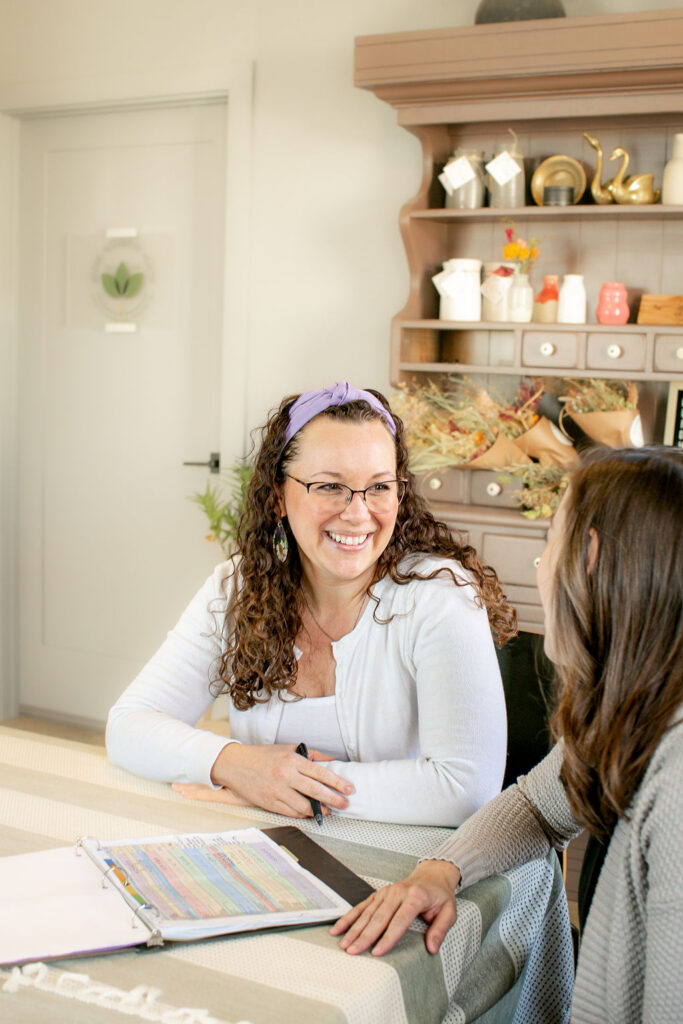
If you’re wanting deeper and Christ-centered support during your TTC journey, I invite you to join me in the Fertility Framework Program. It is my signature course to help you balance hormones naturally and walk in faith through your TTC journey.
Or if you just need to talk, book a free 10-minute consult with me. I would love to hear your story.
You’re not walking this alone. And I’m here to remind you: there is always hope.
March 22, 2026
you're not alone!
you're not alone!
COME HANG WITH
SISTERS IN CHRIST
FOR POSITIVE FERTILITY COMMUNITY
JOIN NOW
Are your
hormones off?
TAKE THE QUIZ TO FIND OUT!
TAKE QUIZ
Where are you in your fertility journey?
SELECT THE SEASON THAT YOU'RE IN
I'M TRYING TO GET PREGNANT
SHOW ME STEPS
FOR NATURAL SUPPORT
WHILE KEEPING GOD FIRST
I NEED THIS
I'M POST MISCARRIAGE
SHOW ME HOW TO
GET PREGNANT & STAY PREGNANT WHILE TRUSTING GOD'S TIMING
YES & AMEN!
I AM PREGNANT!
SHOW ME WAYS TO
NATURALLY SUPPORT MY
PREGNANCY & LABOR DAY
I WANT THIS


a daughter of God, wife, and mother. I have three children here on earth, and three babies in heaven. I'm so glad you're here to get some encouragement in your fertility journey!
Hey, sister!I'm Bekah -
Are your
hormones off?
TAKE THE QUIZ TO FIND OUT!
TAKE QUIZ
on the podcast!
TOP 1.5% GLOBALLY RANKED
TOP 60 ALTERNATIVE HEALTH
Learn more




Be the first to comment