
182 | What If God Doesn’t Heal You? A Conversation on Faith and Suffering
Most of us have heard the quiet, corrosive lie at least once: If you just had more faith, things would be different. If you prayed harder, believed more, surrendered fully — then maybe the healing would come, the baby would stay, the diagnosis would reverse itself.
Sydney Anne Bennett heard that lie too, and she chose to believe something better.
Sydney is a disability advocate, writer, and speaker who became disabled two weeks after her honeymoon. She lives with functional neurological disorder, which disrupts the brain’s ability to send correct signals to the body. She experiences daily seizures, chronic pain, and uses a wheelchair regularly. She is also a wife, a mother of two daughters, and one of the most compelling voices on faith and suffering I’ve encountered.
In our recent podcast conversation, Sydney shared hard-won truths that I believe every woman in a season of waiting, grief, or loss needs to hear.
Suffering Is Not a Lack of Faith
One of the most damaging beliefs Sydney encountered early in her diagnosis was the idea that her healing was tied to her belief. Doctors told her that patients who believed they could get better had higher success rates in neurological therapy, which was a well-intentioned clinical note that became a spiritual burden.
If I don’t get better, is it my fault? she wondered. Am I not believing hard enough?
This, she points out, mirrors a theology many of us absorb without realizing it: the idea that faithful Christians are spared from suffering, and those who suffer must be lacking in some way.
“If we correlate suffering with a lack of faith, and we look to the people in scripture — Job, or even Jesus — then we would have to say that Jesus didn’t have enough faith. Because scripture calls him a man of sorrows. He suffered more deeply than anyone else in history.”
Faith doesn’t protect us from suffering. Scripture shows us that suffering is often the very terrain where faith is refined and proven. The question is not how to avoid hard seasons, but how to hold them.
Hope That Is Bigger Than the Promise of Healing
Sydney talks about the tension she lives in every single day: not knowing if she will be healed in this lifetime, and choosing to praise God anyway.
That tension is familiar to many of us. Maybe you are on your third year of trying to conceive. Maybe you have said goodbye to a pregnancy no one else knew about. Maybe your body keeps giving you answers you did not ask for.
Sydney offers a reframe that has stayed with me since our conversation: our hope has to be bigger than the thing we’re waiting for.
“If our future hope is only the promise of healing — or a pregnancy, or a dream fulfilled — then we are placing our hope in something that may not come in this lifetime. But if our hope is in the redemption that Christ promises, the future glory that Scripture says will work backward and redeem every painful moment, then that hope cannot be taken from us.”
Hebrews tells us that faith is believing in something we cannot yet see. Sydney points out that saying “yes, Lord” in the middle of the darkness — when you have absolutely no idea how God could turn this into something good — is not weakness. It is the very definition of faith!
The Grief No One Knew About
Sydney and her husband experienced a miscarriage with their first pregnancy — a pregnancy they hadn’t yet announced to anyone. That hidden grief is something many of our listeners know intimately.
You are carrying a loss that no one can see. You are mourning someone you loved before anyone else knew they existed, while you feel completely alone in it.
Sydney felt that too. But she took a small, terrifying step: she opened up to a small community of mothers, shared that she had experienced a miscarriage, and described how completely unprepared she had been for the devastation of it.
What happened next changed her.
Woman after woman said, yes. Me too. I remember.
And then came the phone call from a woman she had never met, a mother who had walked through ten miscarriages. She sat with Sydney on the phone and let her pour out her heart.
“She said, we’re both mothers and we’ve both lost babies, so let me sit with you here. I never would have experienced that if I hadn’t opened up.”
Your vulnerability is not a burden, more so it is an invitation.
Practical Steps Toward Community
If you are in a hard season and feeling isolated, Sydney offers this:
- Think of one person in your life who has walked through something similar. They may not have experienced the exact same thing, but you probably know at least one woman who has had a loss, struggled to get pregnant, or carried a chronic illness quietly. Approaching her with vulnerability is not a burden. It is a gift to you both.
- Talk to your pastor or an elder at your church. Sydney did this during her husband’s deployment and was connected to a mentor she never would have found on her own. Church leadership often carries knowledge of the quiet griefs their community holds.
- Start with one person. The wider community usually follows. But even one person to carry your brokenness with changes everything.
Fearfully and Wonderfully Broken
Sydney’s debut book takes its name from Psalm 139, and reframes the verse in a way that stopped me.
We often read “fearfully and wonderfully made” and picture a whole, healthy, complete person. But Sydney asks: what if that promise includes our brokenness? What if every cell of our being, including the broken ones, the grieving ones, the waiting ones, was written by God to be something fearful and wonderful?
“We are living in the tension right now, the in-between of being fearful and being wonderful at the same time. But the promise is coming. And if it doesn’t come in this lifetime, it will come in the next — and it will be so intense and concentrated that it will turn every fearful thing you are feeling in this moment into something wonderful.”
If you are in a hard season… waiting, grieving, wondering how on earth God could redeem this, Sydney’s book is for you.
Ready for more support?
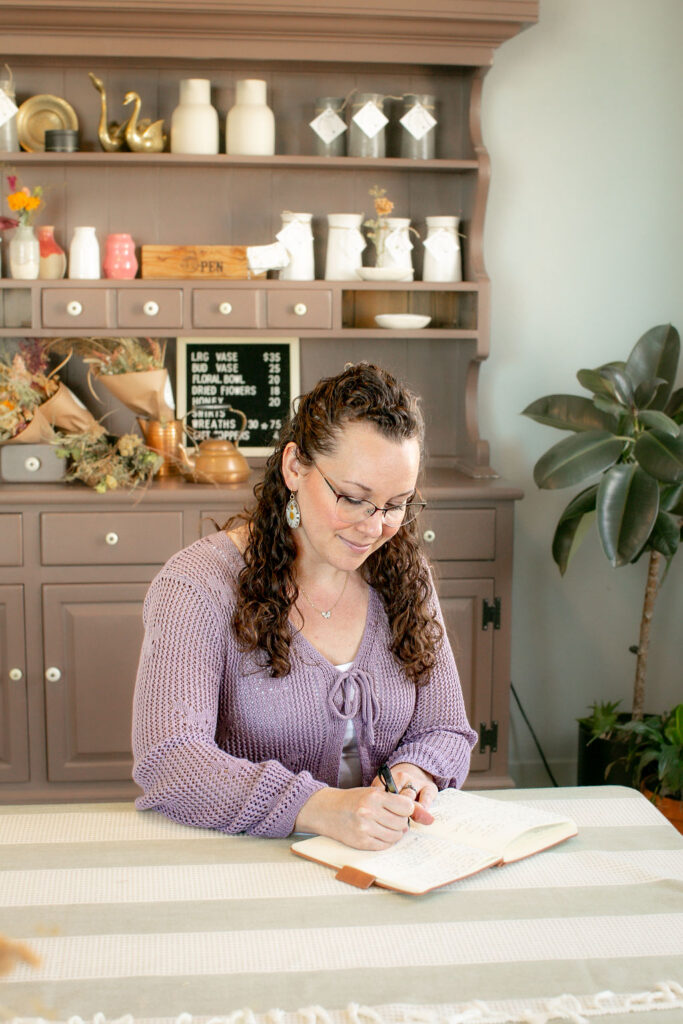
I’d love to chat with you! I offer a free 10-minute consult where I can provide personalized guidance and prayer.
And when you’re ready, I’d love to walk alongside you inside Fertility Framework, where we focus on healing, hormone support, and faith-centered care after loss. You don’t have to walk this road alone.
May 1, 2026
you're not alone!
you're not alone!
COME HANG WITH
SISTERS IN CHRIST
FOR POSITIVE FERTILITY COMMUNITY
JOIN NOW
Are your
hormones off?
TAKE THE QUIZ TO FIND OUT!
TAKE QUIZ
Where are you in your fertility journey?
SELECT THE SEASON THAT YOU'RE IN
I'M TRYING TO GET PREGNANT
SHOW ME STEPS
FOR NATURAL SUPPORT
WHILE KEEPING GOD FIRST
I NEED THIS
I'M POST MISCARRIAGE
SHOW ME HOW TO
GET PREGNANT & STAY PREGNANT WHILE TRUSTING GOD'S TIMING
YES & AMEN!
I AM PREGNANT!
SHOW ME WAYS TO
NATURALLY SUPPORT MY
PREGNANCY & LABOR DAY
I WANT THIS


a daughter of God, wife, and mother. I have three children here on earth, and three babies in heaven. I'm so glad you're here to get some encouragement in your fertility journey!
Hey, sister!I'm Bekah -
Are your
hormones off?
TAKE THE QUIZ TO FIND OUT!
TAKE QUIZ
on the podcast!
TOP 1.5% GLOBALLY RANKED
TOP 60 ALTERNATIVE HEALTH
Learn more



Be the first to comment