
190 | The Signs Your Body is Ready to Conceive After Miscarriage
After a miscarriage, there’s a question that sits quietly in the back of your mind — one you might not even say out loud at first. Is my body ready to try again?
I know that question well. I’ve carried it three times over. And what I found on the other side of it changed how I approach every part of this journey with the women I walk alongside.
Today I want to open in Isaiah 43:19, because I think it belongs right at the beginning of this conversation: “Behold, I am doing a new thing. Now it springs forth. Do you not perceive it? I will make a way in the wilderness and rivers in the desert.”
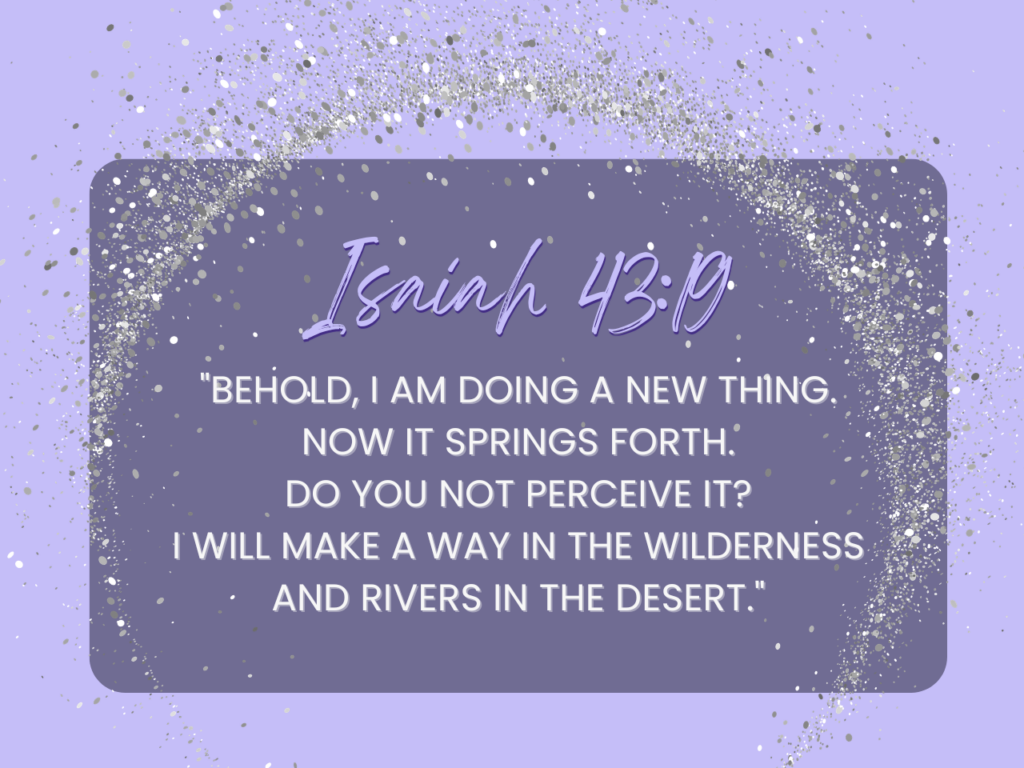
If you’ve walked through miscarriage, you know what the desert feels like. The barren stretches. The longing. The exhaustion of wanting something so much and not knowing when — or if — it’s coming. This verse isn’t a guarantee about timing. But it is a promise about who is walking through the wilderness with you. And I want us to keep that anchor close as we talk through what readiness actually looks like.
Before we dig in, one thing I always say first: please consider waiting two to three cycles before trying to conceive again after a loss. I believe my husband and I had two losses that we didn’t need to have, because we didn’t yet know how to track my fertile window using a fertility awareness method. Once we learned — and I could actually identify when I was and wasn’t fertile — we were finally able to give my body the time it needed to heal before trying again. Those cycles of waiting weren’t wasted. They were the most important work we did.
Sign #1: You’ve Discovered Your Root Causes — and Addressed Them
Last week I talked about the importance of identifying your roots: thyroid dysfunction, gut imbalances, adrenal fatigue, liver health, chronic inflammation. These are the systems that feed directly into your hormones — and when any one of them is off, your body’s ability to ovulate well and sustain a pregnancy is compromised.
But here is what I want to talk about in this episode: discovering your roots is only step one. Addressing them is what actually changes things.
I found out after my losses that my thyroid wasn’t functioning optimally and my adrenals were genuinely depleted. And honestly? If you’ve been through miscarriage, I’d be surprised if your adrenals weren’t impacted in some way. The grief, the anguish, the emotional weight of loss — it’s intense and it is real. Grief is a physical experience. It raises your cortisol. It taxes your stress response. And all of that has downstream effects on your hormones and your cycle.
For me, addressing my adrenals looked humbling. I am a busybody. I love doing a hundred things at once. But in that season, the most powerful medicine I had access to was sleep. My husband held down the household while I slept in more mornings than I can count. It felt uncomfortable. But it was necessary.
Root cause work is not a quick fix. It takes months, not days. But before I would encourage any woman to try to conceive again, I want to see evidence that those roots have been identified and that she’s actively working on them.
Sign #2: Your Luteal Phase Is Looking Healthy
Your luteal phase is the window from ovulation until your period begins — and what’s happening during those days tells us an enormous amount about your progesterone production, which is mission critical for carrying a pregnancy.
Here’s what I look for: Are you getting unexplained mood swings, rage, sore breasts, headaches, or spotting before your period? These aren’t just annoyances. They’re signals that your progesterone might not be doing what it needs to do — and if that’s the case, your body isn’t quite ready to sustain a pregnancy yet.
This is why I’m such a passionate advocate for tracking your cycle with a specific, evidence-based fertility awareness method. Not just loosely keeping track, but genuinely charting in a way that gives you verifiable data. I teach the FEMM method inside my Fertility Framework program, and I see again and again how much information a chart holds — information that a single blood draw or appointment will never capture.
When women come onto our group coaching calls with their charts after a few months of doing the root cause work, I get to have my favorite conversations. We look at the good, the hard, the progress. And sometimes I get to say: your chart looks beautiful — I think you’re ready. That moment is everything to me.
And sometimes it’s a harder, kinder conversation: here’s what we’re still seeing, here’s what we can do. Because your chart does not look perfect yet doesn’t mean you’re broken — it means we have more information about where to focus.
Sign #3: You Have Peace from the Holy Spirit and Wise Counsel Around You
This one is last, but it is not the least. In fact, in my own life and in what I watch God do in the lives of the women I work with — this is often the most important sign of all.
Proverbs 15:22 says: “Plans fail for lack of counsel, but with many advisers they succeed.” I believe that applies to this season too. Seeking out people who understand how to look at your charts, your whole health picture, your specific story — that is not weakness. That is wisdom. I’d love to be one of those voices for you, and there are other hormone coaches like me who offer this kind of support as well.
But more important than any coach, any program, any protocol — is the peace of the Holy Spirit. That means getting really quiet. Getting on your knees and asking: Lord, is now the time? And then actually listening. And being okay — genuinely okay — with whatever his answer is in this season.
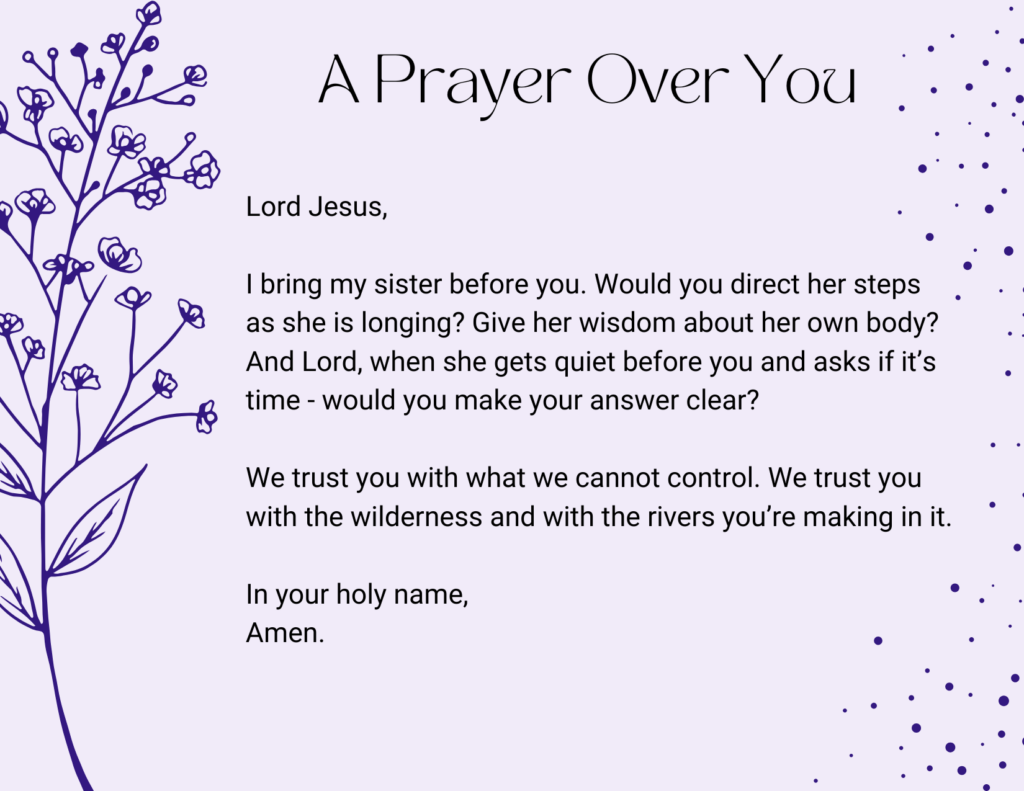
Sometimes he says yes. Sometimes he says: wander in this wilderness with me a little longer. And learning to hold both of those answers with open hands — that is its own kind of healing.
Are you looking for more support?

If you want to start with something free and full of practical and spiritual guidance, my Faith-Driven Fertility eBooklet is waiting for you at bekahyawn.com/booklet.
And if you’re ready to go deeper — to bring your charts, your questions, and your story somewhere you’ll actually be seen — I would be so honored to have you inside the Fertility Framework. You can learn more at bekahyawn.com/course.

August 24, 2026
you're not alone!
you're not alone!
COME HANG WITH
SISTERS IN CHRIST
FOR POSITIVE FERTILITY COMMUNITY
JOIN NOW
Are your
hormones off?
TAKE THE QUIZ TO FIND OUT!
TAKE QUIZ
Where are you in your fertility journey?
SELECT THE SEASON THAT YOU'RE IN
I'M TRYING TO GET PREGNANT
SHOW ME STEPS
FOR NATURAL SUPPORT
WHILE KEEPING GOD FIRST
I NEED THIS
I'M POST MISCARRIAGE
SHOW ME HOW TO
GET PREGNANT & STAY PREGNANT WHILE TRUSTING GOD'S TIMING
YES & AMEN!
I AM PREGNANT!
SHOW ME WAYS TO
NATURALLY SUPPORT MY
PREGNANCY & LABOR DAY
I WANT THIS


a daughter of God, wife, and mother. I have three children here on earth, and three babies in heaven. I'm so glad you're here to get some encouragement in your fertility journey!
Hey, sister!I'm Bekah -
Are your
hormones off?
TAKE THE QUIZ TO FIND OUT!
TAKE QUIZ
on the podcast!
TOP 1.5% GLOBALLY RANKED
TOP 60 ALTERNATIVE HEALTH
Learn more




Be the first to comment