
177 | Chemical Pregnancy VS Late Period: The Signs Every Woman Needs to Know
If you’ve ever had a cycle that was late, or a period that felt heavier or more painful than usual, you may have found yourself wondering: was that just a weird period, or was that something more?
This is one of the most tender questions I get, and it’s one I have personal experience with. My husband and I had three losses between our two sons and two daughters. Our first was a 15-week miscarriage. Our next two sweet babies in heaven were chemical pregnancies — very early losses that happened right around when a period would have been due.
So I want to walk you through this gently, practically, and with the truth that I believe you need to hear in this podcast episode.
It Is Worthy to Know
I was recently talking with a listener who shared something that has stayed with me. She said, “I wish I hadn’t known. I wish I wasn’t tracking so much because knowing it was a life makes this hurt so much more.”
And I understand that. I really do.
But here is what I want to tell you, sweet sister: it is worthy to know. Yes, knowing that you carried a life, even for a few days, makes the grief more real. But that little one deserves to be known by you, loved by you, and remembered by you. You are going to meet that child in heaven. They are with Jesus right now, and God knows every single day, hour, minute, and second of that precious life… even if it was very short.
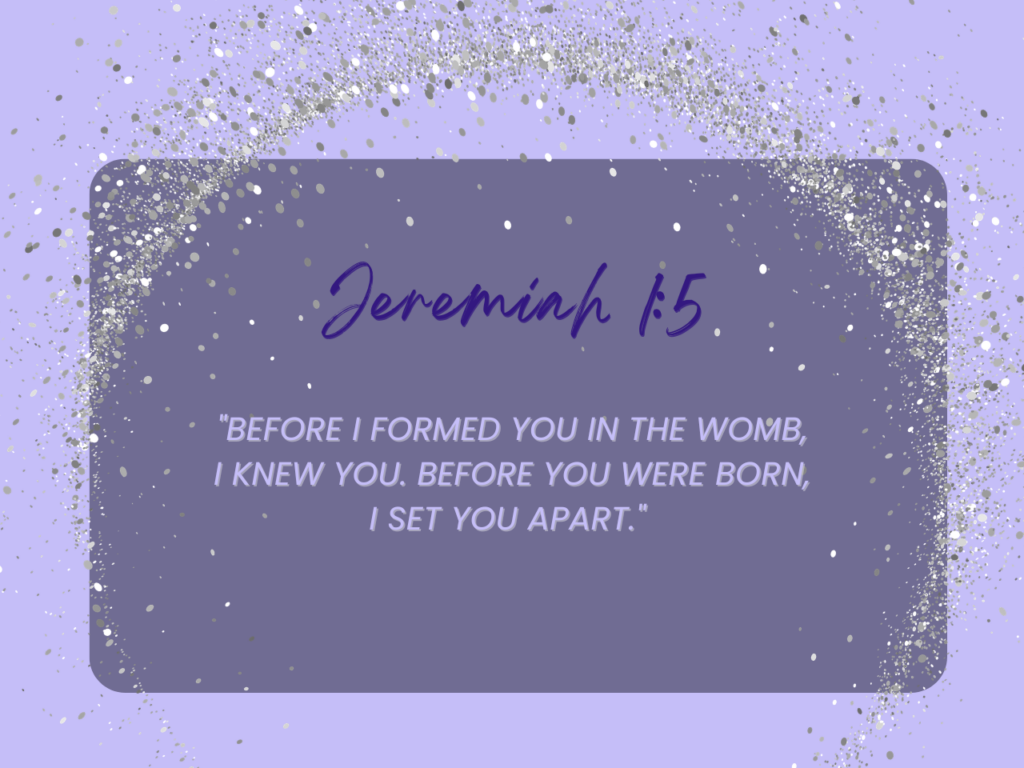
Hold onto that. He knew your baby. He knows you. And He is still good.
What Can Cause a Late Period?
Before we get into chemical pregnancies, let’s talk about what can actually cause your period to come late because late periods absolutely happen, and they don’t always mean pregnancy.
Things like illness, stress, travel, moving, or a change in medications can all delay your period. But here’s the important thing to understand: these factors affect your follicular phase — the phase before ovulation — not your luteal phase. So when life gets hard or hectic, your body may take longer to ovulate. But once you do ovulate, your luteal phase stays pretty consistent.
This is a key distinction when it comes to figuring out what actually happened in a given cycle.
Why Charting Is Everything
If you want to truly understand whether you experienced a late period or an early pregnancy loss, charting your cycle is the most powerful tool you have.
When you learn to chart through an evidence-based method (like FEMM, which I teach inside Fertility Framework), you track daily biomarkers that help you clearly identify your follicular phase and your luteal phase. Over time, you learn your normal. You see how long your luteal phase typically runs. You notice when something is off.
Here’s why that matters: a normal, healthy luteal phase runs about 9–18 days. FEMM medical management likes to see it at least 11 days for optimal hormonal health. If your luteal phase is consistently 13 days, and one cycle it stretches to 15 or 16 days? That’s a signal. That likely means conception occurred.
On the flip side, if you had a cycle where your follicular phase was extra long — say you were traveling or dealing with a lot of stress — and then your luteal phase came and went at its normal length? That was a late period, not a pregnancy.
Charting gives you that clarity. And clarity is a gift, even when the truth is hard.
What Does a Chemical Pregnancy Actually Look Like?
Chemical pregnancies typically happen between weeks 4 and 6 of gestation, which means conception occurred, the embryo began traveling to the uterus, and then something prevented it from implanting and staying. Sometimes there’s a chromosomal issue. Sometimes the uterine lining just wasn’t the right environment. There are a lot of nuances.
When the pregnancy ends, it’s triggered by a drop in hormones, so the bleeding that follows isn’t technically a period, but it can look like one.
Here’s what you might notice:
- It could look a lot like a normal period: Especially if the loss happened very early, the bleeding might not be dramatically different from your typical cycle… just late.
- It might be more intense than usual: Heavier bleeding, more blood clots, stronger cramping, low back pain, and bleeding that lasts a bit longer than normal are all things that can accompany an early loss.
- There may be more spotting: Some women notice spotting before the heavier bleeding begins.
There’s a wide range of experiences, and every woman and every loss is different. But if your period was late and notably different from your norm, that can be a meaningful clue.
You Don’t Have to Figure This Out Alone

If you’ve been through an early loss or you’re wondering if you have, I want you to know that you are seen. You are heard. And you don’t have to navigate your hormones and your cycle without support.
If you’re ready to go deeper and learn to truly chart your cycle through a faith-based, evidence-based method, I would LOVE to have you inside Fertility Framework.
👉 Learn more at here.

April 4, 2026
you're not alone!
you're not alone!
COME HANG WITH
SISTERS IN CHRIST
FOR POSITIVE FERTILITY COMMUNITY
JOIN NOW
Are your
hormones off?
TAKE THE QUIZ TO FIND OUT!
TAKE QUIZ
Where are you in your fertility journey?
SELECT THE SEASON THAT YOU'RE IN
I'M TRYING TO GET PREGNANT
SHOW ME STEPS
FOR NATURAL SUPPORT
WHILE KEEPING GOD FIRST
I NEED THIS
I'M POST MISCARRIAGE
SHOW ME HOW TO
GET PREGNANT & STAY PREGNANT WHILE TRUSTING GOD'S TIMING
YES & AMEN!
I AM PREGNANT!
SHOW ME WAYS TO
NATURALLY SUPPORT MY
PREGNANCY & LABOR DAY
I WANT THIS


a daughter of God, wife, and mother. I have three children here on earth, and three babies in heaven. I'm so glad you're here to get some encouragement in your fertility journey!
Hey, sister!I'm Bekah -
Are your
hormones off?
TAKE THE QUIZ TO FIND OUT!
TAKE QUIZ
on the podcast!
TOP 1.5% GLOBALLY RANKED
TOP 60 ALTERNATIVE HEALTH
Learn more




Be the first to comment