
195 | Trying to Conceive? 3 Ways Husbands Can Help Their Wives Feel Loved
We’re almost 200 episodes into this podcast, and if I’m honest, I’ve realized something: we haven’t talked to your husband nearly enough.
This entire month, the Lord has kept bringing husbands to mind — and I think it’s because so much of the trying-to-conceive season gets carried by us, the wives. We track our cycles. We research our hormones. We sit in the doctor’s offices. We hold the hope and the disappointment, month after month. But dear friend, you are not doing this alone. You are doing this with him.
Both of you are fearfully and wonderfully made. Uniquely, in the male design and uniquely in the female design. And this season, this specific kind of hard, is one neither of you could have fully imagined when you said your vows. “For better or for worse” is easy to say at the altar. It’s a whole different thing to live it.
So today, I’m not talking to you, sister — not directly, anyway. I’m giving you three tips to hand straight to your husband. Three ways he can help you feel loved in this season, from a wife’s perspective. Share this episode with him.
The Verse Behind This Episode
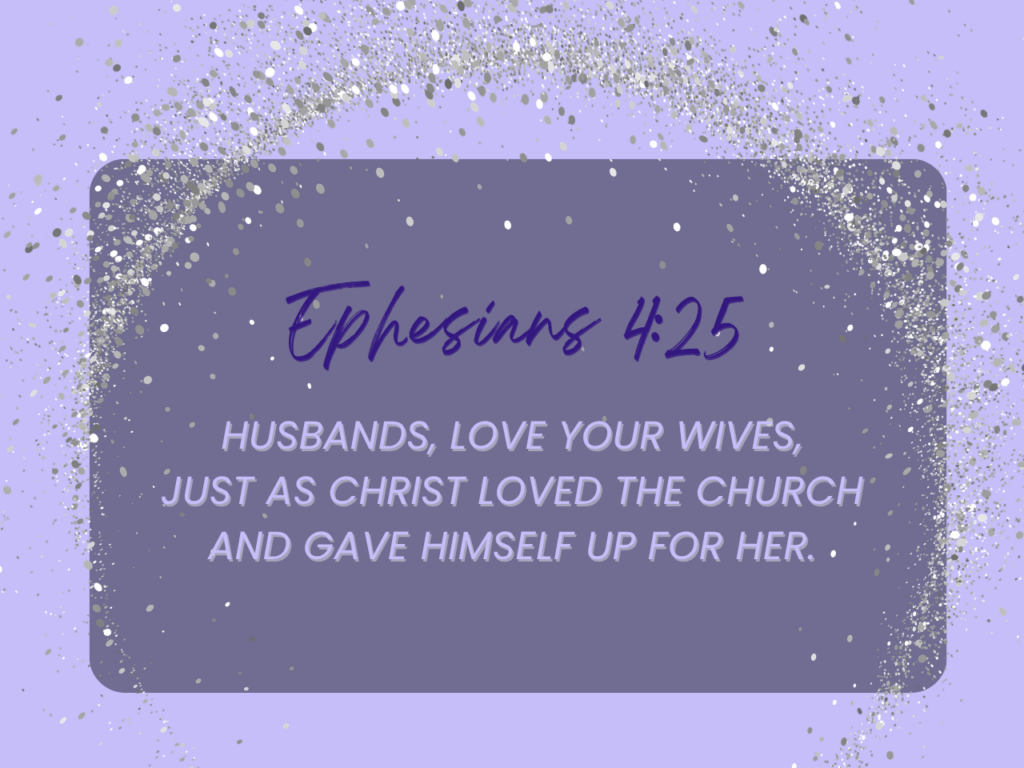
“Husbands, love your wives just as Christ loved the church and gave himself up for her.” — Ephesians 5:25
I’m not here to preach to the choir. Husbands, so many of you are doing an incredible job. You are your wife’s rock and her guardian, in a lot of ways, of her heart and her soul through this trying season. And this verse gives us the shape of what that looks like: sacrificial, Christlike love. Not performative. Not transactional. Given.
This season is an invitation — hard as it is — to love your wife in a way that sanctifies you both. So here are three tips, sweet husband, that would mean the world to her.
1. Give Her Your Undivided Attention
When she wants to talk about this topic with you, her fertility, her cycle, her doctor’s appointments, or just the emotional weight of feeling tired and maybe a little hopeless, give her everything.
This isn’t a “tell me about your day” kind of conversation. For her, this topic is woven into the depths of her soul. It goes past the physical, past the emotional — it’s spiritual for her. So when she brings it up, sit down. Stop what you’re doing. Look her in the eyes.
I know eye contact can feel a little unnatural for you guys — you tend to like doing life shoulder to shoulder. But we girls are wired for eye contact. Turn your shoulders toward her. Hold her hands, or rest a hand on her back. You don’t even have to say much. That alone will pour love over her in a way words can’t match.
A Practical Starting Point
If you don’t do anything else from this list, do this one. Setting aside intentional and undivided time is where connection starts.
2. Keep Dating Her
However long you’ve been married — one year or fifteen — she still wants to feel pursued. And in this season, intimacy can start to feel less like connection and more like an obligation. A checkbox. Something to get through so you can try again this month.
I know that’s not what you want, either. You want to cherish her, not check a box.
Here’s a story I love to tell. When my husband and I were just getting to know each other in college, I was stuck working a desk shift during a football game, and I was starving. Chick-fil-A sounded incredible — but I couldn’t leave. He said, “I’ll go get you some.” And he ran. About a mile there, across a dangerous six-lane highway, and a mile back. When he showed up, sweaty and out of breath with the biggest smile on his face, I remember thinking: this is the guy.
Ten years of marriage later, if he did something like that today, I would fall in love with him all over again.
So here’s your practical step: think back to when you were dating or courting her. What did you do to win her over? Write it down. Maybe even ask her what stood out to her most. Then find a way to do it again — or reinvent it — in this season.
When intimacy flows from pursuit and love rather than obligation, it changes everything. Don’t we want it to be an outpouring of our love for one another, rather than a duty tied to a fertile window?
3. Support Her by Learning With Her
The female body and the male body are so different by design — and until you go through real education alongside your wife, it’s hard to fully understand hers.
Here’s something I find fascinating: the Catholic Church requires engaged couples to go through natural family planning education as part of marriage prep. Most Protestant marriage counseling doesn’t include anything like it. So most of us walk into marriage without ever learning God’s design for our fertility — when we’re fertile, when we’re not, how conception actually works.
That was true for my husband and me. The advice we got was simply to be careful which birth control we chose, since some methods can be abortifacient. Good advice, as far as it went — but it wasn’t the deeper education we needed. And honestly, it makes me a little frustrated now, knowing what I know.
This is part of why I built Fertility Framework. Inside the program, couples learn a fertility awareness method together — and go even deeper, learning to track and understand what might need support in her cycle. When husbands join in, not just to learn but to say, “I’m willing to make changes too,” it blesses the whole marriage.
Here’s why that matters more than you might think: when the Lord gives you a baby, half of the genetic code comes from you, dear husband. Your lifestyle choices can actually turn certain genes on or off. So when your wife is asked to make changes, your willingness to walk that road with her is a profound act of sacrificial love — for her, and for your future child.
It takes two to tango, y’all. This is not just her journey. It’s yours, together.
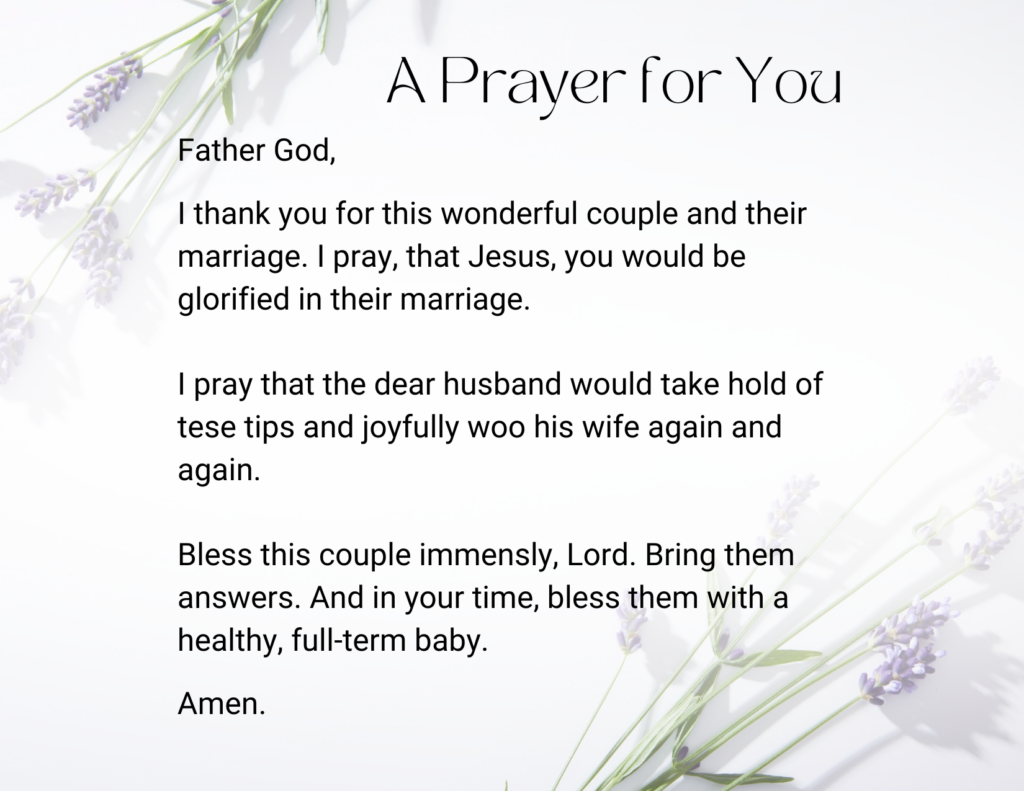
Take the Next Step
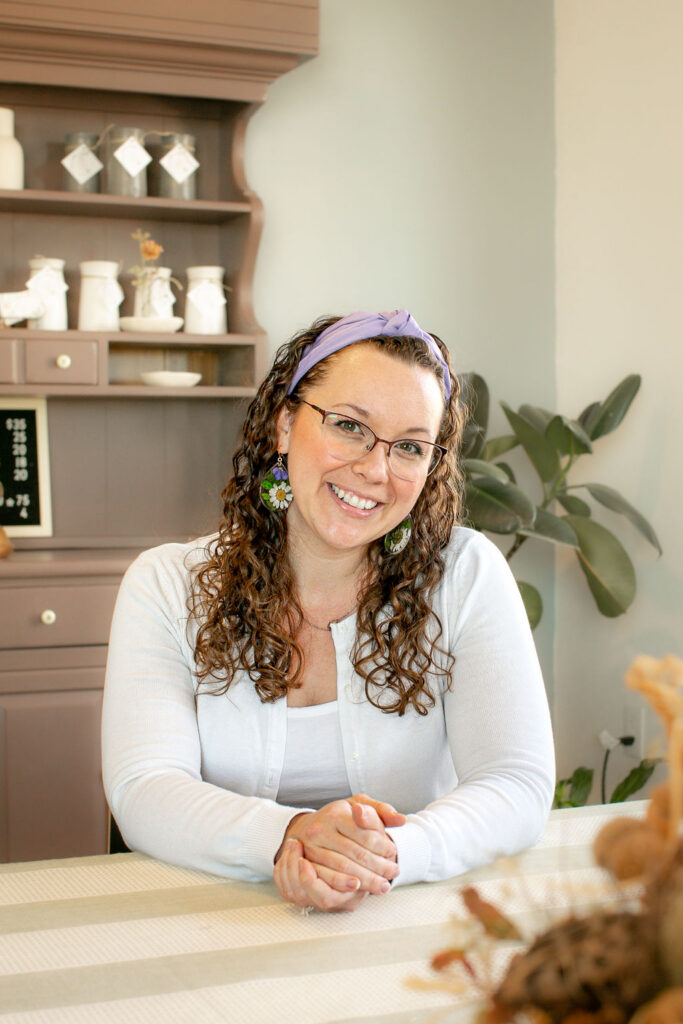
If you’re a wife listening to this and wondering how to even start the conversation with your husband, or if you’re a husband who just heard all three of these and wants to take a next step — I’d be honored to walk with you both. You can take my free hormone quiz at bekahyawn.com/quiz to get a starting point for understanding her body.
Or dive deeper together inside Fertility Framework at bekahyawn.com/course.
You are not walking this alone. You never were.

September 7, 2026
you're not alone!
you're not alone!
COME HANG WITH
SISTERS IN CHRIST
FOR POSITIVE FERTILITY COMMUNITY
JOIN NOW
Are your
hormones off?
TAKE THE QUIZ TO FIND OUT!
TAKE QUIZ
Where are you in your fertility journey?
SELECT THE SEASON THAT YOU'RE IN
I'M TRYING TO GET PREGNANT
SHOW ME STEPS
FOR NATURAL SUPPORT
WHILE KEEPING GOD FIRST
I NEED THIS
I'M POST MISCARRIAGE
SHOW ME HOW TO
GET PREGNANT & STAY PREGNANT WHILE TRUSTING GOD'S TIMING
YES & AMEN!
I AM PREGNANT!
SHOW ME WAYS TO
NATURALLY SUPPORT MY
PREGNANCY & LABOR DAY
I WANT THIS


a daughter of God, wife, and mother. I have three children here on earth, and three babies in heaven. I'm so glad you're here to get some encouragement in your fertility journey!
Hey, sister!I'm Bekah -
Are your
hormones off?
TAKE THE QUIZ TO FIND OUT!
TAKE QUIZ
on the podcast!
TOP 1.5% GLOBALLY RANKED
TOP 60 ALTERNATIVE HEALTH
Learn more




Be the first to comment